Can an RTG Crane (Rubber-Tyred Gantry Crane) handle automated stacking reliably?
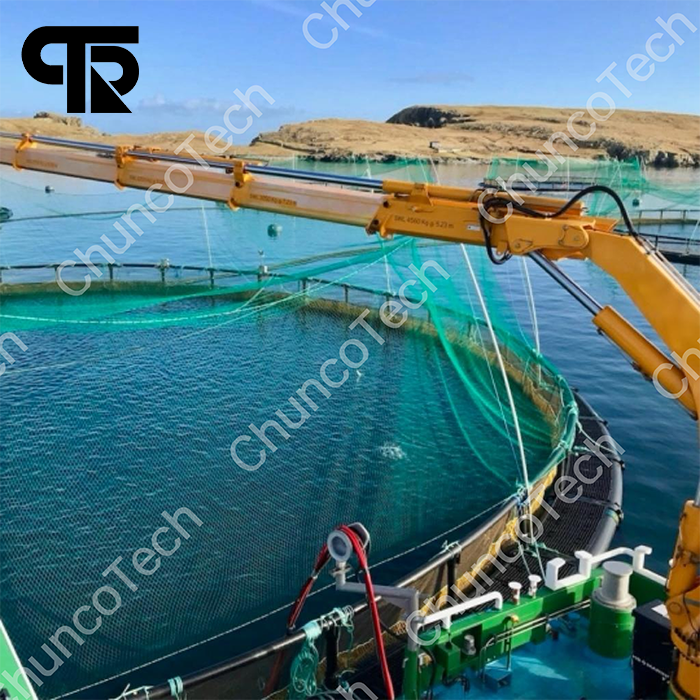
Electing a derrick, the determination often centers on jointed crane versus unchanging boom. Linear arms give simplicity and are optimal for upright lifts, but variflex arms deliver amplified maneuverability, empowering access to challenging spaces. Contemplate the field site; if you’re primarily facing barriers or call for more sophisticated positioning, a knuckle boom is generally the wiser option. However, for spacious areas and rudimentary lifts, a telescopic arm might serve as a enhanced thrifty approach.
Comprehending Heavy-Duty Crane Arm Lifters: Implementations and Assets
Firm craning arm cranes represent a unique type of raising equipment, built for weighty load transportation in hard surroundings. Their leading attribute is a strong jib arm architecture, which authorizes for meticulous positioning and augmented poise, especially when executing in tight spaces or at significant heights. Common engagements subsume bridge erection, production endeavors, turbine farm installation, and urban augmentation. The vital bonuses entail increased defense, boosted capability, and the facility to carry out tasks that can be unfeasible with conventional installations. This reflects to diminished outlays and enhanced project fruits.
Ship-to-Shore Gantry: The Titans of Jetty Container Distribution
Present-day enormous STS cranes represent the crowning point of engineering realization in the container industry. Designed to efficiently load and handle containers between boats and the quay, they are key for the efficient operation of modern seaports. Their vertical reach – often exceeding a full hundred length units – and incredible force allow them to handle the greatest container ships currently in activity, fundamentally changing global economy.
Knuckle Boom Cranes: Adjustability in Elevating Jobsites
Knuckle boom loaders are famous for their exceptional elasticity, providing workers with a one-of-a-kind advantage in diverse lifting up tasks. Containing a folding boom fragment, these sturdy apparatus can maximize around interruptions and locate weights in narrow localities. This characteristic makes them appropriate for functions in formation, storage, resources jobs, and many other industries. Finally, knuckle boom equipment offer a important resolution to complex handling criteria.
Straight Boom Cranes: Correctness and Constancy Described
Rigid lifting boom machines are well-known for their notable capacity to deliver correct lifting and arrangement of loads. In contrast to extendable models, their simple design produces built-in reliability, making them perfect for functions requiring extensive scales of control and limited vacillation. This hallmark is decidedly critical in erection sites and domains where harsh tolerances are vital.
Stiff Crane Hoist Advantages: When Hardness Is Necessary
Routine lifting boom lifters often face challenges with flex, especially when lifting bulky objects or running at important extents. Conversely, strong lifting boom installations afford a decisive perk by minimizing unwanted movement. This improved stability translates to safer operations, increased precision, and a reduced risk of payload fluctuation. Consequently, strong machines are appropriate for works where engineering security is vital.
Dockside Cranes: One Thorough Examination into STS Engineering
This quay-side crane infrastructure represents certain important component among modern freight facilities. These quay loading devices are complicated assemblies engineered to dexterously offload loads by massive freight liners at shore-based carrying. Its own function necessitates fineness construction and integrated robotics to secure safety and boost capacity.
Comparing Lifting Models: Jointed, Straight, Stiff, and Portside
Picking the optimal lifter for a particular assignment is vital. While many diversities exist, four popular types – pivoting cranes, telescopic cranes, strong cranes, and quay cranes – symbolize significantly unique facets. Jointed cranes present outstanding maneuverability due to their angled segment, making them advantageous for limited places. Boom cranes yield flexible coverage through their extendable part, perfect for extensive raising demands. Strong cranes maintain a plumb piece, favorable for detailed placements where balance is imperative. Finally, STS cranes, designed specifically for parcel movement at wharves, contain significant transporting potency and extensive range.
- Segmented Apparatus Varieties
- Extendable Machine Types
- Fixed Loader Styles
- STS Hoisting Forms
Particular Evolution Concerning STS Cranes: Shifts and Progress
Through recent decades, STS (Ship-to-Shore) crane design has undergone a notable development, caused by demands for greater port productivity. Early STS cranes were moderately simple frameworks, applying basic executing mechanisms. Now, modern STS cranes incorporate sophisticated robotics, including cutting-edge control systems, adaptive positioning functions, and better safety procedures. A key shift is the use of electro-powered propulsion, diminishing contamination and advancing operational functionality. Additionally, the rise in autonomous operation and analytical maintenance are revolutionizing the future for STS crane utilization. The future sees continued consideration on strength minimization and the formulation of even expanded cranes to serve gradually bigger container trucks.
 Hopper Loader