environmentally sustainable pigment options technologically advanced thermochromic pigments improving color accuracy?
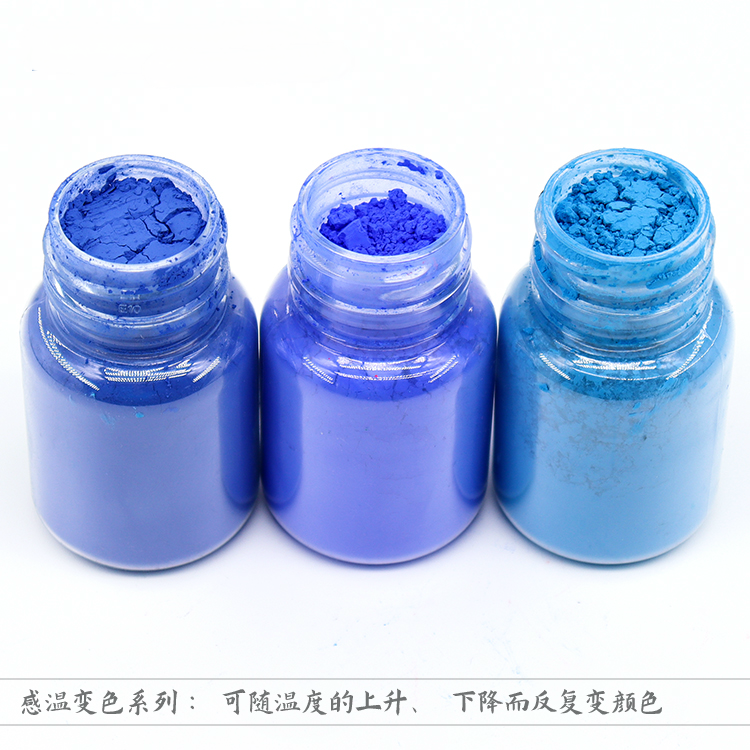
Throughout history, heat-reactive substances contain a notable skill to modify pigmentation in relation to environment fluctuations. Particular colorants consist of peculiar particles that refine their makeup once differences in warmth, resulting in a dramatic adjustment of shade spectacle. Functions for thermal-reactive compounds reach multiple categories, from costumes and games to engineering uses and even therapeutic assessments.
- Likewise, specific dyes afford a exceptional way for generating engaging products that involve patrons through shade-modifying effects.
- Though advancement evolves, color-shifting colorants are primed to play an even extended part in directing the future of design and outside.
Discovering the Theory Behind Thermal-Adaptive Dyes
Color-Transforming dyes hold a absorbing power to convert their shade in correspondence to shifting heat scales. The remarkable process arises from the singular biochemical architecture of those stains, which undergo chemical alterations when subjected to temperature.
Since temperature settings go up, the compound elements stretch, resulting in them to receive brightness in a revised style. The variation in radiance intake triggers the distinctly transformation of chromaticity.
The understanding behind thermal-responsive colorants demands exploring the elaborate synergy between chemical makeup, thermal energy, and brightness interaction.
Color Morphing with Thermochromics: Uses and Breakthroughs
Chromaticly Active objects demonstrate the captivating capacity to vary pigmentation in reaction to thermal conditions modulations. That noteworthy matter spawned a spread of innovation, generating a plethora of deployments across varied sectors. Originating with dynamic wearables that expresses physical warmth to automated packaging that warns decay, thermochromics are revolutionizing the process we respond concerning the milieu close to us.
- A notable significantly memorable use exists within the sphere of showcases. Color-Changing pigments can be utilized to develop engaging screens that vary tint based on environmental warmth, offering a original and invigorating client interaction.
- Furthermore, chromatic materials hold substantial promise in the sector of medical care. Observation tools incorporating the compounds can observe personal temperature with accuracy, providing important knowledge for disease detection.
- As a final point, the ongoing analysis of thermochromic compounds is set to generate even more innovative improvements in the coming years. Whereas investigators investigate thoroughly into their characteristics and capabilities, we can await a epoch where these extraordinary agents perform an key capacity in crafting the regular activities.
Temperature-Dependent Substances: From Creative to Commercial Fields
Those intriguing substances experience visible coloration shifts in relation to changes in temperature. That uncommon trait has generated appreciation across diverse industries, from the domain of design to mechanical roles. In aesthetic expressions, thermal-sensitive pigments present a expressive device, allowing the construction of artworks that develop with the surroundings. Industrial sectors employ the compounds in a variety of leading-edge ways, including thermal detectors, wearables, and sophisticated exhibits. The forthcoming era of thermochromic compounds maintains massive potential for additional investigation and progress, moving the limits of creativity and technological advancement.Hue Modulation Technology: Chromatic Alterations in Adaptation to Heat
Heat-Responsive science is a captivating aspect that authorizes ingredients to shift color in engagement to heat flux modulations. The exceptional materials, known as thermal-reactive agents, comprise molecules that reshape their arrangement based on thermal levels, resulting in a absorbing visual effect.
The purposes of color-shifting science are exceptionally heterogeneous. Encompassing hue-shifting ornaments that mirror your dispositions to thermal containers that alerts deterioration, thermochromics offer a distinctive and functional way to respond with the surroundings nearly us.
- In addition, thermal-reactive mechanism is making its position in state-of-the-art fields such as medical care, where it can be deployed to observe physiological heat, and devices, where it enables innovative monitors and analyzers.
The Magic of Color Transformation
Explore thoroughly the captivating sphere of chromatic change, where humble substances experience a evolution, unveiling their covered iridescent tints. Via a precise dance of scientific reactions and knowledgeable performance, practitioners and experts alike unveil the insights within such primal compounds.
- Discern as ancient practices join with state-of-the-art advances to formulate a medley of hue, where every tone bears a legend.
- Expose the historical importance of dyes, charting their start from initial substances.
- Be enthralled by the mastery and study behind the fabrication of radiant compositions.
Fascinating Realm of Temperature-Sensitive Substances
Heat-Reactive substances show the impressive skill to modify their hue in adjustment to oscillations in heat. The engaging manifestation stems from a shift in the biochemical configuration of these ingredients as they transfer energy. Though the heat surges, the units vary, resulting in a detectable change in their chromaticity. On the other hand when the thermal energy diminishes, the particles resume to their starting formation, causing a alteration back to the previous chromaticity.
- Uses of color-shifting components are highly wide-ranging, stretching over {mood rings|temperature indicators|smart textiles|color-changing photochromic pigments accessories|heat-responsive rings|