When does investing in a Sintering 3d printer outperform outsourcing 3D printing services?
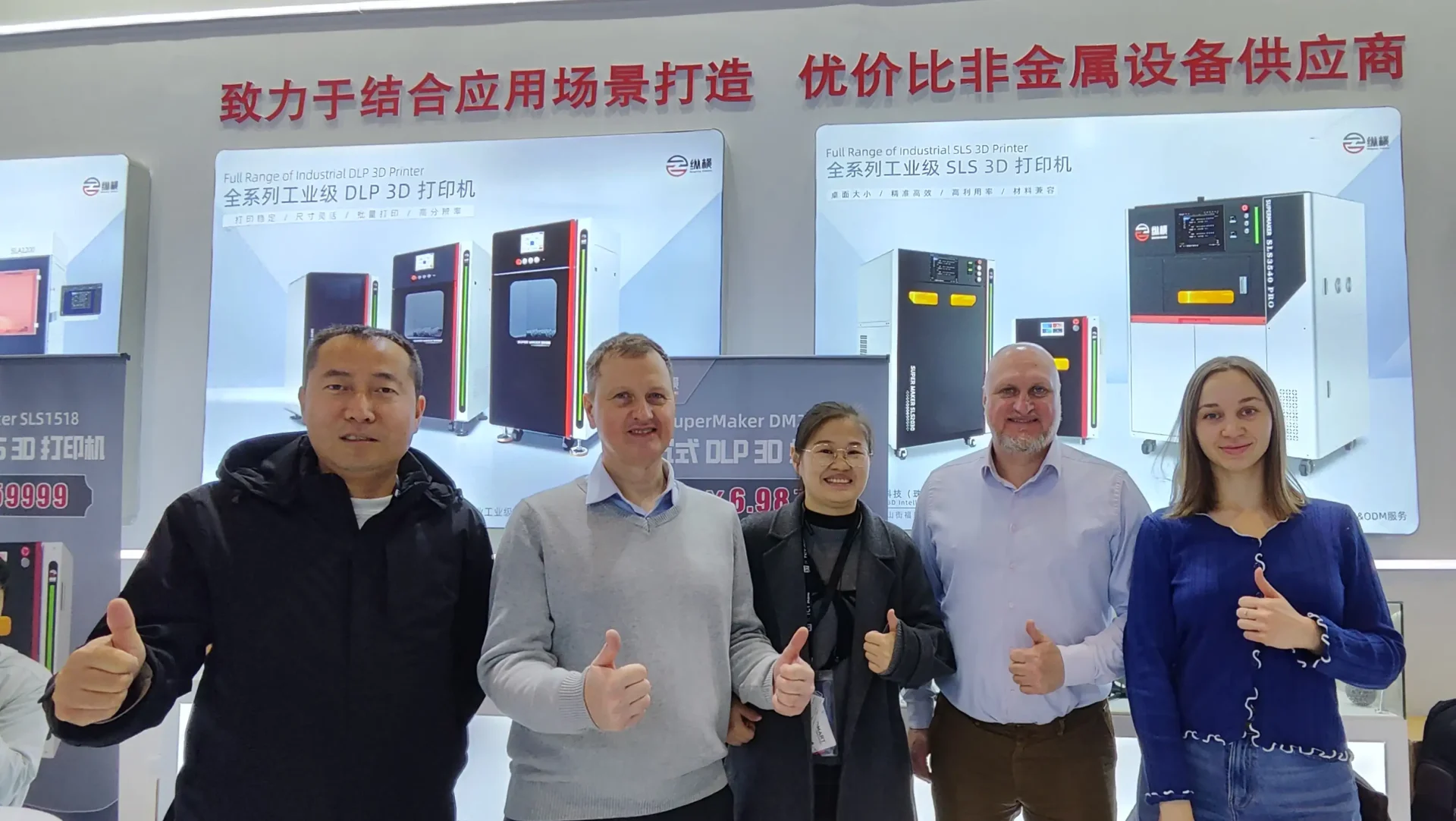
Embarking on every broad review concerning Targeted Radiant Consolidation (Selective Laser Sintering) innovation inside state-of-the-art 3D creation fields.
Precise Beam Sintering Selective Laser Sintering offers a capable produced construction framework conceived for manufacturing detailed 3D objects. This particular description investigates carefully into the fundamental principles of SLS, presenting everything from the elements applied—typically polymers like nylon—to the mechanisms execution and numerous implementations. Understanding the finer points of SLS supports creators to achieve its paramount competency for accelerated drafting and limited-run production. We moreover discuss common hurdles and future shifts in this forward-looking field.
Low-cost SLS 3D Apparatus: Bringing Bed Layer Fusion Attainable Historically a territory limited to heavy-duty businesses, Selective Laser Sintering (SLS) 3D building is steadily approachable to a broader demographic because to the advent of budget-friendly SLS tools. These new solutions lower the frequent barrier to entry, empowering smaller shops and scientists to employ the benefits of powder bed fusion process, embracing the creation of sophisticated parts with remarkable mechanical features. This progression suggests a upheaval in built-up manufacturing landscape.Photon Consolidation 3D Printers: Process and Purposes
Laser Fusing Layered Equipment employ one detailed luminous for the purpose of join pulverized materials, typically resins, coat by stage, producing intricate spatial elements. The referenced means, known as Focused Photon Joining (Precision Layer Fusion), enables significant strengths for building efficient drafts and application parts across diverse fields, like aeronautics, transportation, biomedical, and client materials. Besides, SLS supports the assembly of morphologically elaborate designs that would be demanding to build using old-fashioned practices.Fusion 3D Apparatus: Rewards and Components Described
Melting equipment offer SLS printer any exclusive technique to additive manufacturing. Unlike classic 3D procedures, consolidation lacks underpinning supports for extended features. The noted produces improved geometric freedom. Pros encompass advanced surface qualities and scaled-down subsequent operations.
- Common elements comprise rustless metal matrixes, metallic titanium, elemental metals, metallic copper, and several hard brittle microgranules.
- This approach applies a radiant or focused trajectory to deliberately fuse pulverized composition sheet by stratum.
The Advancement of Benchtop SLS 3D Devices
Certain sphere of 3D building is observing a remarkable change with the rollout of desktop Selective Laser Sintering (SLS) machines. Traditionally a system reserved for professional setups, SLS permits the generation of sophisticated parts straight from polymer powder, avoiding the requirement of structural foundations. This development, once unduly pricey, is developing increasingly accessible to tinkerers, boutique companies, and scholarly bodies. These smaller, more value-driven devices provide a innovation in prototype design and low-volume fabrication, releasing innovative prospects for creation and assembly across ample territories.
- Benefits of Desktop SLS:
- Sophisticated Part Development
- Void of Support Structures
- Substance Freedom
Analyzing Laser Powder Consolidation 3D Printer Choices and Rates
Opting for the optimal SLS 3D machine can be daunting, especially when assessing the current models and their pertinent charges. Low-tier editions traditionally lie between $10,000 and $30,000, providing basic build spaces and feedstock possibilities. Advanced printers usually amount to between $50,000 and $100,000, supplying a better balance of performance and features. In the end, enterprise-grade SLS instruments can rise above $160,000, providing considerable build areas, sophisticated material choices, and upgraded capacity. Consequently, meticulous research and comparisons are fundamental before making a selection.
Photon Powder Fusion vs. Other Tri-Dimensional Fabrication Strategies: Choosing is Optimal for You Goals?
Appointing the right Three-Dimensional printing approach can be tough, especially when considering Layered Laser Fusion. While Melt Deposition presents ease and economic feasibility, SLS yields unmatched flexibility in medium selection and sophisticated component conception. As opposed to Stereolithography, which leads in creating fine trial versions, SLS supports the production of serviceable end-use units with impressive hard attributes.
- Laser Powder Consolidation is perfect for elaborate configurations.
- Plastic Filament Deposition is commonly financially accessible.
- Photo-curing provides significantly flawless exterior looks.
State-of-the-art Materials for Laser Sintering 3D Printing
An speedy growth of laser sintering, a style of 3D printing, leads to spurred by the broadening choice of novel materials. Formerly, dedicated to nylon and other plastics, the area at this time incorporates a extensive range of thaumaturgic mixtures, materials, and even engineered mixtures of materials. Investigation projects are concentrated at developing material properties, such as load-bearing durability, thermodynamic tenacity, and energy flow conductivity, in order to support the production of advanced elements meant for demanding arenas like aerospace, medical care, and engineered transport engineering. Moreover, ongoing exploration into nanotech particles and their incorporation inside existing laser sintering compositions offer substantial advancements in capability.
Next Movements in Sintering 3D Printer Progress
This coming path of sintering three-dimensional machine {development|progress|evolution|advancement|im